The Future of Space Exploration: Mars and Beyond

Humanity’s fascination with the cosmos has driven remarkable advancements in space exploration. From Mars missions to technologies enabling interplanetary travel, the future of space exploration promises unprecedented opportunities to uncover the mysteries of the universe.
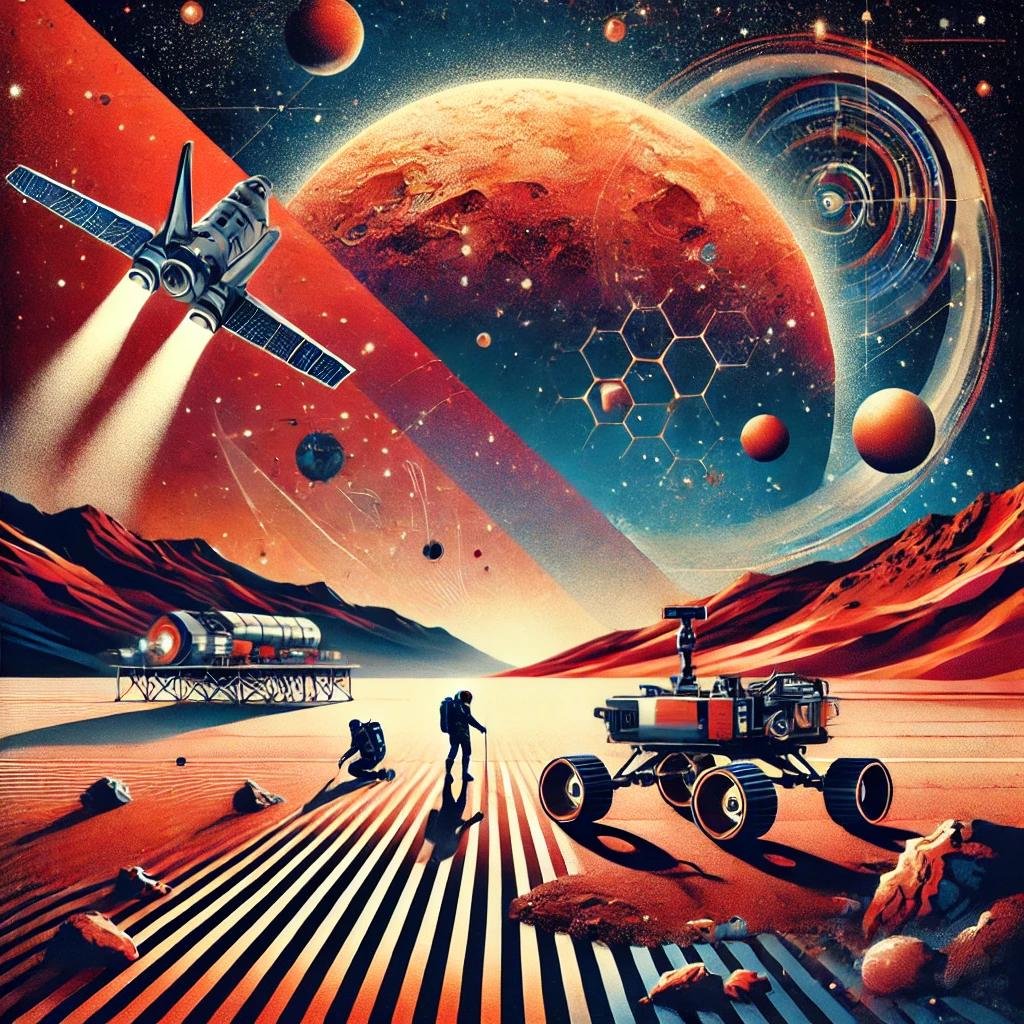
Key Focus Areas
Mars Missions
Space agencies like NASA and ESA are developing missions to explore Mars for signs of life and potential colonization. Projects like the Mars Sample Return mission aim to bring Martian soil back to Earth for analysis.
Innovative Space Technologies
Breakthroughs in propulsion systems, like ion drives and nuclear thermal propulsion, are making space travel faster and more efficient. Advanced robotics and AI are enhancing the capabilities of rovers and spacecraft.
Exploring New Frontiers
Beyond Mars, missions are being conceptualized to explore moons like Europa and Titan, which may harbor subsurface oceans and the potential for life.
Challenges Ahead
Radiation Exposure: Long-duration missions expose astronauts to harmful space radiation, necessitating innovative shielding solutions.
Sustainability: Developing reusable spacecraft and sustainable habitats is essential for reducing costs and supporting life on other planets.
International Collaboration: Coordinated efforts among nations and private companies are vital to overcoming technical and financial barriers.
Why It Matters
Exploring Mars and beyond fuels scientific discovery, inspires technological innovation, and unites humanity in the pursuit of knowledge. It represents a leap toward securing our future as an interplanetary species.
Conclusion
The journey to Mars and beyond symbolizes humanity’s indomitable spirit of exploration. With advancements in technology and collaborative efforts, the dream of exploring distant worlds is becoming an achievable reality.